Quick answer
Good demonstrative speech topics
Good demonstrative speech topics teach the audience how to do something visible, useful, and easy to follow step by step. Choose a process you can show clearly, such as preparing a simple recipe, using a tool, improving posture, organizing a workspace, or practicing a speaking technique.
- Pick a topic with clear steps and a visible result.
- Use props, slides, or a live example only when they make the process easier to follow.
- End by summarizing the steps and showing the audience what to try next.
We have all learned a lot from demonstrative speeches. Teachers have resorted to demonstrative speeches to pass on their knowledge since the inception of formal education. Listening and learning from a teacher’s demonstration speech topics has always been easy.
However, things may take a different turn when you are in charge of passing on knowledge, and demonstration speech ideas somehow vanish in those moments. As we all know, the ability to teach is an especially vital leadership skill, and it makes understanding demonstrative speaking a thousand times more crucial.
Presenting and coming up with demonstrative speech topics may be exhausting, but you can do it like a pro, too. And that is what I’ll “demonstrate” in this post.
If you aren’t interested in learning the intricacies of demonstration speech, skip to the end, where I share final tips and conclude. But that’s if you are fine with missing examples of demonstrative speech topics and elements, how to write an outline, and other details in the body.
What is Demonstrative Speech?
Firstly, a Demonstrative speech will teach the receiving audience how to do a specific task or process. Even experts may struggle with speech writing despite having all the knowledge on the proposed topic.
Writing a speech that ensures your audience learns something new can be challenging. In this case, the reason is that a demonstrative speaker is like a guide that takes the audience through an engaging step-by-step"' how-to" process.
This type of speech is also known as an explanation speech or a demonstrative presentation.
The essence of demonstration speech ideas and topics is in conveying logical information. However, to captivate one’s audience, a bit of emotion becomes necessary, which leads to my point on the elements of demonstration speech.

What Are the Main Elements of a Demonstrative Speech?
As you’ll see later, demonstration speech ideas and content vary per field. However, the significant elements that make a speech demonstrative are somewhat similar.
So, what are these elements?
The Nature of Demonstration Speech
One way people refer to demonstrative speech topics or demonstrative speech itself is “How-to.” because they show:
- How to prepare (or make) something
- How to perform (or complete) a process
- How something works
The Demonstrative Speech Topic
Do you get the idea?
Likewise, let us see 25 sentences' examples of demonstrative speech topics.
25 Demonstrative Speech Topic Examples
| General | Business | Education | Health | Technology | Teenagers |
| How to organize your email account | Ten steps to writing a moving business plan | How do I start and ace my presentations | 30 ways to eat your daily water intake | How to make a mobile-friendly website | How to apply makeup |
| How to fold a napkin properly | How to pitch in one minute | How to get people to listen to me | How to stay healthy as a diabetic | How to use Photoshop to change your brand’s face | How to apply for your dream college and get in |
| How to do CPR before an ambulance arrives | How to make your money work for you | How to pick a friendly schedule | Conscious ways to protect your mental health | How to make a useful banner | How to make different creative braid styles |
| Beginner tips for swimming lessons | How to maximize elevator rides for marketing | How to match with your dream college from day one of high school | How to get an excellent insurance premium | How to troubleshoot any device and get solutions | How to start eCommerce and make money at home |
| How yoga can help you in your career | How to achieve your annual business goals | How to optimize online classes as a student | How to care for a relative with amnesia | Ten website creation tips on WordPress | How to get a suitable part-time job |
Additionally, let’s test your understanding by comparing five potential speech topics.
5 Potential Demonstrative Speech Topics
| Topics | Demonstrative speech topic | Not Suitable |
| Tips to prepare for a journey abroad with your pet | ✅ | |
| Is the Government doing enough to tackle global warming? | ➖ | |
| Is euthanasia ethical in medicine? | ➖ | |
| How canned foods are packed | ✅ | |
| How to become a social media influencer | ✅ |
There are many topic ideas for a speech. For example, you could do something funny like “How to ensure you make eye contact with your crush.”
If you have a friend or relative similar to your target audience, try to run your topic by them. They can help you pick a helpful title, or you can use a virtual assistant.
I hope you have new demonstration speech ideas now. Once you select the perfect topic, you must move on to the next phase. Additionally, here’s a link to 500+ demonstrative speech ideas.
Tips on Creating Your Demonstration Speech Outline
Why do you need a demonstration speech outline? An outline will help you stay on track during your presentation.
An essential outline creation tip is allocating time to different segments based on the duration of your speech.
- Introduction: This shouldn’t take too long. If you can do it in less than 2 minutes, it gives you more time to talk. However, it should ideally not exceed 5 minutes.
- Body: It is the central part of your article, and the time allocation will depend on your topic and speech time. So it could run from 5 minutes to 30 minutes or more.
- Conclusion: Make a summary that you can present in 5 minutes or less. Your finale doesn’t need to run too long.
- Question and Answer: The time you give needs to be at your discretion. The best thing to do is set a time limit, preferably less than 10 minutes, and inform your audience of the number of questions you can take during the section at the beginning. So, you can answer 2-5, depending on brevity.
So, how do you prepare your demonstration speech outline?
- The first step is to pick a topic we discussed extensively above.
- Next, you must make an introduction - Your introduction will keep your audience listening to you. So try to grab the attention of your listeners with your introduction.
- Outline the step-by-step process of what you describe or the points you give as tips.
- Next, add more details to the step-by-step process.
- List and gather additional tools that you will need to help your audience understand. Here, you gather visual tools like dummies, drawings, videos, or even human models.
- Since you have a better picture of your speech, include your outline in your introduction. It gives your audience an overall idea of what you are talking about
- Write your conclusion -Try to go over the crucial points you made. Add something memorable so your audience has a takeaway from your speech.

Writing the Demonstrative Speech Proper
In addition to the outline, here are tips for writing the main speech.
- What is your purpose?
- Why should your audience listen to you?
- The body of your story
- Question and answer segment
- Variations of your topic
- Summary
What is your purpose?
This is the ideal place to add an emotional element to your demonstration speech idea.
Why? When stating your purpose, you can tell your audience why you care about the topic and why they should.
When you start your speech by passionately discussing your purpose, you can keep your audience intrigued.
Why Should your audience listen to you?
Before, we established that a demonstrative speech topic makes your audience expect to learn from you from the onset. So, your next goal is to tell your listeners why you are the best presenter to teach them.
This section can serve as your introduction and take storytelling's direction.
For example, let’s say you want to discuss “how to maintain your blood sugar as a diabetic.” Now will be a perfect time to tell a story about how you are diabetic or a doctor who treats them.
The body of your story
After you establish credibility and intrigue, it is time to start talking. This part should be a walkover since you picked a demonstrative speech topic you understand well.
Key points to remember here are:
- Try to make your point easy for your audience to understand
- Although your speech is functional, don’t forget to keep your audience engaged using visual aids or interactions. More on that later.
- You can take two approaches to present your speech and both work. You could summarize all the points then start explaining them or introduce each one as you go.
Question and answer segment
Everyone in your audience is unique and may have questions you did not cover in your speech. As a result, it would be best if you remembered that this could happen irrespective of how excellent your presentation was.
So, set some time aside for questions and answers. But this is only if your time is enough to make a Q and A session. Otherwise, you can be generous to give them the means to contact you with their questions.
Variations of your topic
Furthermore, if you want to add details to your topic, you can include a segment or a branch of the subject.
For example, when you talk about “How college students can manage their time,” A great addition can be “How medical students can manage their time.”
Summary
As I stated in the demonstration speech ideas for an outline, your summary or conclusion is essential. Since you taught them a lot, you can do an overview so they have your key takeaways.
Final Helpful Tips For Your Speech Writing
As promised, if you skipped until the end, you can start with the concluding tips here. Let’s continue with some final points to remember when preparing your demonstration speech ideas for those who kept reading.
Keep things Simple

You do not need a bogus presentation. Unless you are making a list of one or two-word items, keeping your points between 3-7 is best.
Using big words is unnecessary, except if your audience knows it or the term has no synonym.
Engagement is Key
Engagement is vital regardless of the type of speech or demonstrative speech topic. Not only do you want your audience to remember your lesson, but you also want your listeners to be involved.
If your topic allows you to call up volunteers, try that or involve them in active participation.
Visual Aids is Your Best Friend
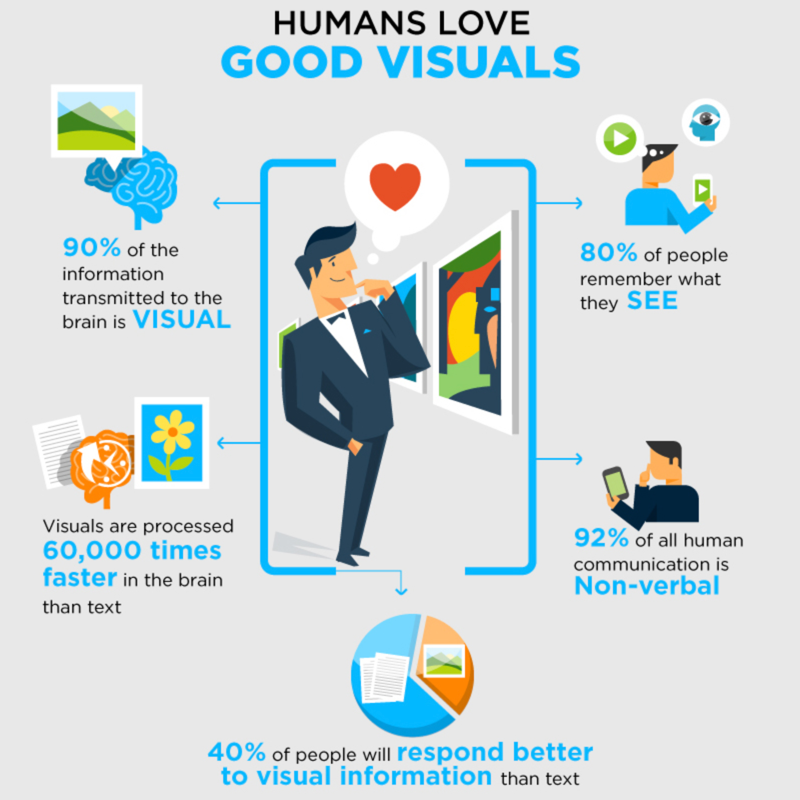
Also, using visual aids makes a speech more useful. The easiest way to add visuals to your oration is by utilizing PowerPoint presentations.
Instead of using many words in your presentation, let it contain more pictures while you talk. You can also add props to make the presentation even better.
Give Your Audience Reason to Remember You
Finally, not every audience member will instantly grasp what you say. So, try to give them the means to contact you, a website to check, or a pamphlet to read after your presentation.
These factors help them remember your speech and keep your points in their minds.
Practice your memorable speech with Orai. Perfect it with feedback on your tone, tempo, and many more!
How can I make my demonstrative speech more engaging?
Captivate your audience in your next demonstrative speech by following this recipe: hook them with a thought-provoking intro, clearly explain the "why" and connect through relatable stories, actively engage them with questions and participation, enhance visuals with props and charts, speak conversationally with touches of humor, summarize key points and empower them with a call to action. This dynamic recipe will ensure your audience remembers and applies your valuable message!
What are some effective visual aids to use in a demonstrative speech?
To truly engage your audience in your demonstrative speech, choose visual aids that are both relevant and impactful. Consider using props for tangible connections, slides or presentations for organized information, videos for dynamic demonstrations, charts or diagrams to simplify complex data, and even samples for hands-on experiences. Remember, the key is to select visuals that enrich understanding and keep your audience engaged, leaving them captivated by your topic.
What is the difference between a demonstrative speech and an informative speech?
Though both demonstrative and informative speeches educate, they do so in distinct ways. While informative speeches rely on storytelling and facts to convey knowledge verbally, demonstrative speeches prioritize hands-on learning through live demonstrations and engaging visual aids, showcasing processes, and tasks for deeper understanding. Imagine baking a cake: a demonstrative speech would present each step visually, while an informative one would share the history and cultural significance of the cake through captivating narratives. The type of speech you choose hinges on whether you want your audience to know or actively do simply.
How can AI be used to practice a demonstrative speech?
Forget the practice mirror! AI speech coaches are here to elevate your demonstrative speech game. Get real-time feedback on everything from pace to non-verbal cues, receive personalized tips on storytelling and slide design, and practice interactively in a stress-free zone. Plus, enjoy the flexibility to polish your skills on the go, anytime, anywhere. With AI-powered coaching, you'll refine your delivery, boost your confidence, and captivate your audience with polished, impactful presentations. It's like having a personal speech coach in your pocket, ready to help you deliver stand-out speeches!
What is the purpose of a demonstrative speech?
Craft a demonstrative speech that truly connects with your audience! Infuse your purpose with passion, establishing yourself as the ideal guide, and remember, it's about informing and engaging. Combine clear explanations with captivating visuals and live demos, drawing inspiration from both articles: yours highlights the power of emotional connection and expertise, and theirs emphasizes the effectiveness of hands-on learning experiences. This winning formula ensures your audience is informed, engaged, and ready to implement their newfound knowledge!
Conclusion
If this were a demonstrative speech, we would have needed a break since it is quite long. I hope you learned something new and ace your next presentation like a pro.
Just like this post helped you learn all about demonstrative speaking, it will make me happy to know you are applying everything you learned. So, let’s recap the essential points.
- How do you choose the right topic?
- What are the critical elements of demonstrative speaking ideas?
- How do you write a demonstrative speech?
- What were our final tips?
Always remember the role of visual aids and engage your listeners! Thank you.
Frequently asked questions
What is a demonstrative speech?
A demonstrative speech teaches an audience how to do something through explanation, steps, examples, and often a visual demonstration.
What makes a good demonstrative speech topic?
A good topic is practical, simple to demonstrate within the time limit, and useful enough that the audience can try it afterward.
How should I outline a demonstrative speech?
Use a simple structure: introduce the outcome, list the materials or context, walk through the steps, show the result, and recap the process.